
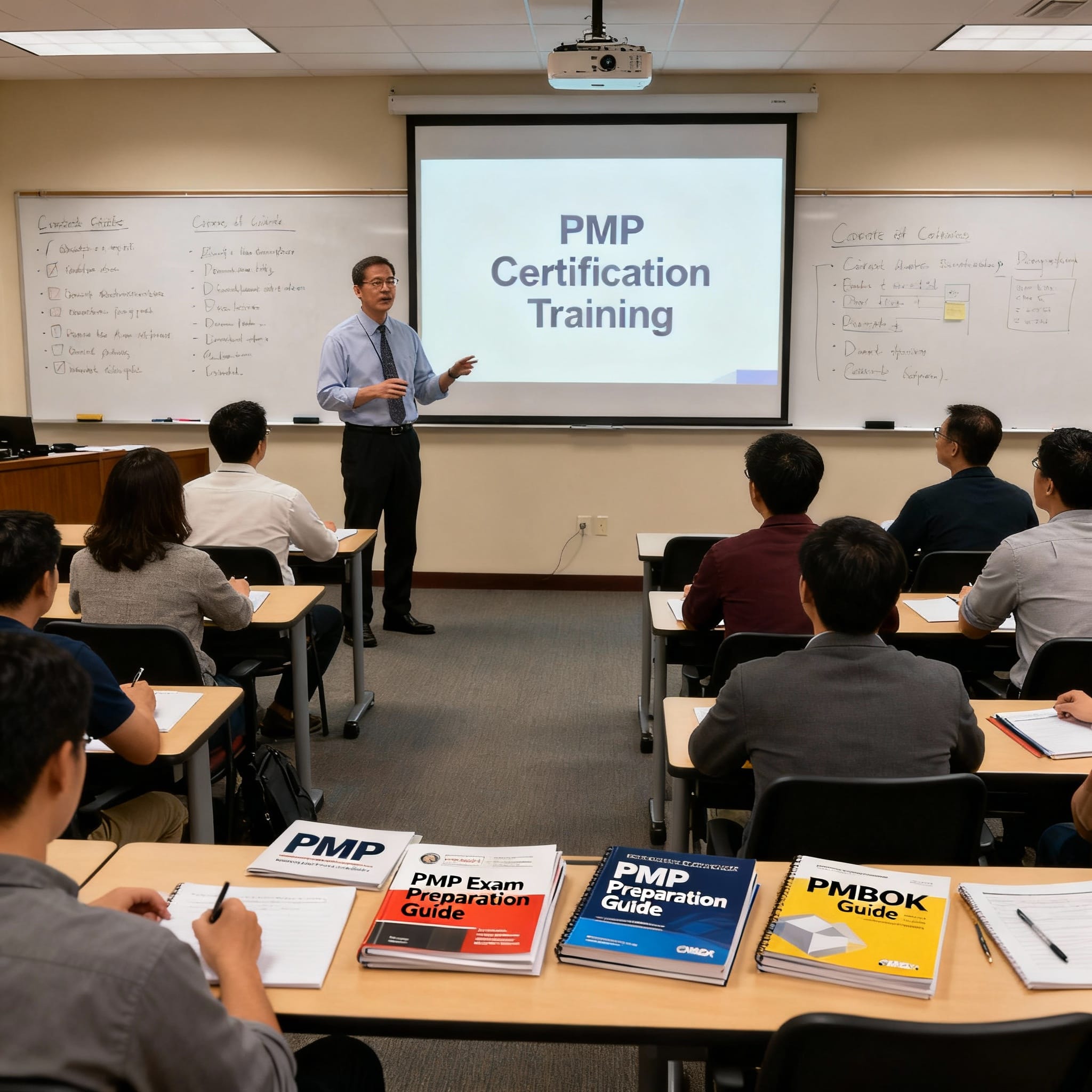
 Enhance your skills with this PMP certification guide—featuring free training and expert certification guidance[/caption]
In today’s competitive project-driven world, certification is often the deciding factor between landing a leadership role and being overlooked. Among the most prestigious credentials is the Project Management Professional (PMP) certification, issued by the Project Management Institute (PMI). It’s globally recognized and considered the gold standard for project managers.
This blog serves as a complete PMP certification guide for 2025, covering everything you need to know about eligibility, exam structure, and the life-changing career benefits of becoming certified. We’ll also show how inSAKE Academy simplifies the process with mentorship, structured preparation, and its revolutionary pay-after-you-pass model.
What is PMP Certification?
The PMP certification guide begins with understanding what the credential stands for. PMP is short for Project Management Professional, a certification that validates an individual’s skills in leading projects, managing teams, and achieving business outcomes.
Recognized in over 200 countries, PMP is not restricted to a single industry. Certified professionals can be found in IT, banking, consulting, healthcare, construction, and even government organizations. Employers value it because it assures them the candidate knows globally accepted project management standards and methodologies.
At its core, PMP emphasizes structured project execution, leadership, and the ability to align projects with business goals. According to PMI’s salary survey, PMP-certified professionals earn up to 30% more than their non-certified peers. That makes this credential not only prestigious but also financially rewarding.
For professionals seeking global mobility and credibility, there is no better investment than pursuing PMP certification.
7 Reasons Why Free PMP Training with Certification Guidance at Insake Is a Game-Changer
PMP Certification Eligibility Criteria
Before applying, candidates must meet the PMP certification eligibility criteria defined by PMI. These ensure that only professionals with proven knowledge and project experience qualify to attempt the exam.
Educational Qualifications and Experience:
- Bachelor’s Degree (or equivalent): Requires 36 months of project management experience.
- Secondary Degree (high school diploma, associate degree, or equivalent): Requires 60 months of project management experience.
Project Management Education:
All applicants must complete 35 contact hours of formal project management education. This can be fulfilled through inSAKE Academy’s guided training, which is aligned with PMI’s official standards.
Key Point:
The experience requirement is not about holding a formal “project manager” title. Instead, it considers time spent leading, directing, or contributing to projects. Many professionals already meet these criteria without realizing it.
Meeting the PMP certification eligibility standards ensures that once you register, PMI recognizes your background and allows you to take the exam.
Understanding the PMP Exam Structure
The next step in this PMP certification guide is understanding the exam format. The PMP exam is rigorous, designed to evaluate both knowledge and application of project management principles.
PMP Exam Overview:
- Number of Questions: 180
- Time Limit: 230 minutes
- Question Types: Multiple-choice, multiple response, hotspot, and drag-and-drop.
Content Domains Covered:
- People (42%): Focuses on leadership, team building, and stakeholder management.
- Process (50%): Examines technical aspects of project execution, scheduling, and monitoring.
- Business Environment (8%): Assesses alignment of projects with organizational strategy.
The exam reflects real-world scenarios. For instance, candidates must apply Agile, Hybrid, and Predictive methodologies depending on context. This ensures certified professionals can thrive in diverse environments.
To succeed in the PMP exam, candidates need more than rote memorization. They must practice with realistic mock tests, analyze case studies, and develop strategies to manage time effectively. inSAKE Academy provides structured practice tests and exam strategies tailored to PMI’s content outline.
https://home.insake.in/pmp-training/
Step-by-Step PMP Certification Guide
The application process can intimidate first-time candidates. This section of the PMP certification guide simplifies it into clear steps:
- Verify Eligibility: Ensure you meet educational and experience requirements.
- Complete Application on PMI Website: Provide details of your education and project experience.
- PMI Application Review & Audit (if selected): PMI may request supporting documents. Applicants should prepare project experience summaries and certificates.
- Approval & Fee Payment: Once approved, pay the exam fee (PMI members receive discounts).
- Schedule the Exam: Choose between test center or online proctored format.
- Prepare Effectively: Use structured resources, mock exams, and mentorship.
- Take the Exam and Get Certified: Upon passing, candidates join PMI’s global network of professionals.
The PMP certification guide emphasizes accuracy in your application. Small mistakes—like mismatched dates or incomplete descriptions—can delay approval. With inSAKE Academy’s mentorship, candidates receive guidance on filling out forms correctly and handling the audit process seamlessly.
Career Benefits of PMP Certification
The most exciting part of any PMP certification guide is understanding the benefits. Becoming PMP-certified changes not only how others perceive you but also how you approach your work.
Key Career Benefits:
- Salary Advantage: PMP-certified professionals often earn 20–30% higher salaries than non-certified peers.
- Global Recognition: PMP opens opportunities in multinational companies worldwide.
- Leadership Credibility: It validates your ability to lead complex projects with proven frameworks.
- Industry Flexibility: PMP is applicable across IT, healthcare, banking, engineering, and more.
- Networking Opportunities: Certified professionals gain access to PMI chapters, events, and global communities.
Beyond these tangible benefits, PMP equips you with confidence. You gain the ability to speak the universal language of project management, bridging gaps between teams, clients, and stakeholders.
For ambitious professionals, the PMP is not just an exam—it’s a career accelerator.
Why Choose inSAKE Academy for Your PMP Journey?
While this PMP certification guide provides knowledge, execution requires the right training partner. This is where inSAKE Academy stands apart.
Unique Advantages of inSAKE’s PMP Program:
- Zero Upfront Fee: Pay the main course fee only after you pass the PMP exam. This reduces financial risk.
- Expert Faculty: Learn directly from experienced project managers who provide practical insights.
- PMI-Aligned Curriculum: Every module matches PMI’s exam content outline.
- Mock Tests & Case Studies: Realistic simulations help students gain exam confidence.
- Lifetime Mentorship: Support doesn’t end with certification—alumni get ongoing guidance for career growth.
- Flexible Batches: Weekend and weekday options allow working professionals to balance preparation with jobs.
inSAKE transforms the certification process into a risk-free journey. It eliminates barriers such as cost, lack of mentorship, and exam anxiety. Candidates get complete support—from eligibility verification to post-exam career guidance.
Tips for Maximizing Success in PMP Preparation
Even the best PMP certification guide must include study strategies. Free and structured preparation resources work best when combined with discipline.
Success Strategies:
- Create a Study Plan: Dedicate fixed hours weekly and track progress.
- Leverage Mock Exams: Regular practice improves accuracy and time management.
- Join Study Groups: Peer learning helps reinforce concepts and clarify doubts.
- Focus on Weak Areas: Identify domains you struggle with and revise thoroughly.
- Use inSAKE’s Mentorship: Take advantage of expert feedback to avoid mistakes.
By following these steps, candidates increase their chances of clearing the PMP exam on the first attempt.
Conclusion
This PMP certification guide has walked you through eligibility requirements, exam structure, and the career-transforming benefits of becoming certified. With global recognition, salary advantages, and leadership opportunities, PMP is one of the most valuable credentials for professionals today.
But the journey is not one you need to take alone. inSAKE Academy simplifies the process with its zero-upfront fee model, expert-led mentorship, and comprehensive preparation resources. From understanding PMP certification eligibility to passing the PMP exam, you receive complete support before, during, and after certification.
It’s time to invest in your future—confidently and risk-free. Join inSAKE Academy’s PMP program and transform your career in 2025.